Essential Hand Tools for New Woodworkers
By Woodshop Blueprints ·
You want to build a simple bookshelf. You walk into the hardware store and face a wall of tools. There are rows of saws, bins of bits, and price tags that make your stomach drop.
It is easy to leave with too much, or with nothing at all. The good news is that you need far less than you think. A short list of hand tools can take you a long way.
This guide walks through the basics. It covers what each tool does, why it matters, and what to look for.
Start With a Plan, Not a Shopping Cart
Before you buy anything, pick a first project. A cutting board, a small box, or a step stool are all good choices. Your project tells you which tools you need right now.
Buy tools as your projects call for them. This keeps your costs down. It also helps you learn each tool well before you add the next one.
Measuring and Marking Tools
Good work starts with good marks. If your marks are off, every cut after them will be off too.
Tape Measure
A sturdy tape measure is the first tool most people own. Look for clear markings that are easy to read. The hook at the end should be firm and not bent.
Combination Square
This tool checks that corners are square. It also marks angled lines and helps you draw straight lines across a board. It is one of the tools you will reach for most often.
Pencil and Marking Knife
A sharp pencil works fine for rough cuts. A marking knife cuts a thin line into the wood fibers. That line gives your saw or chisel a clean place to start.
Cutting Tools
A Good Handsaw
You will need a saw to cut boards to length. Many beginners like a pull saw, which cuts when you pull it toward you. It tends to be easy to control and leaves a thin cut.
A traditional push saw works well too. Whatever you pick, keep it sharp and let the saw do the work. Pushing hard usually makes a crooked cut.
Chisels
Chisels clean up joints, trim edges, and cut small notches. A small set in a few common widths is plenty to start. Look for steel that holds an edge and handles that feel good in your hand.
Shaping and Smoothing Tools
Block Plane
A block plane is small enough to use with one hand. It trims end grain, softens sharp edges, and shaves a board down to fit. It is often the first plane people buy.
Sanding Block and Sandpaper
Sandpaper smooths the surface before a finish. Wrap it around a flat block so you sand evenly. Work from coarse grit to fine grit, and try not to skip steps.
Card Scraper
A card scraper is a thin piece of steel. It shaves off tiny curls and leaves a smooth surface. It costs little and can save you a lot of sanding.
Holding Tools
A board that slides around is hard to cut and unsafe to work on. Holding your work steady is half the job.
Clamps
Clamps hold pieces together while glue dries. They also lock a board to your bench while you saw or chisel. Start with a few bar clamps and add more as your projects grow.
A Solid Work Surface
You do not need a fancy bench at first. A sturdy table that does not rock will do. Add a vise when you can, since it frees both hands for the tool.
Driving and Assembly Tools
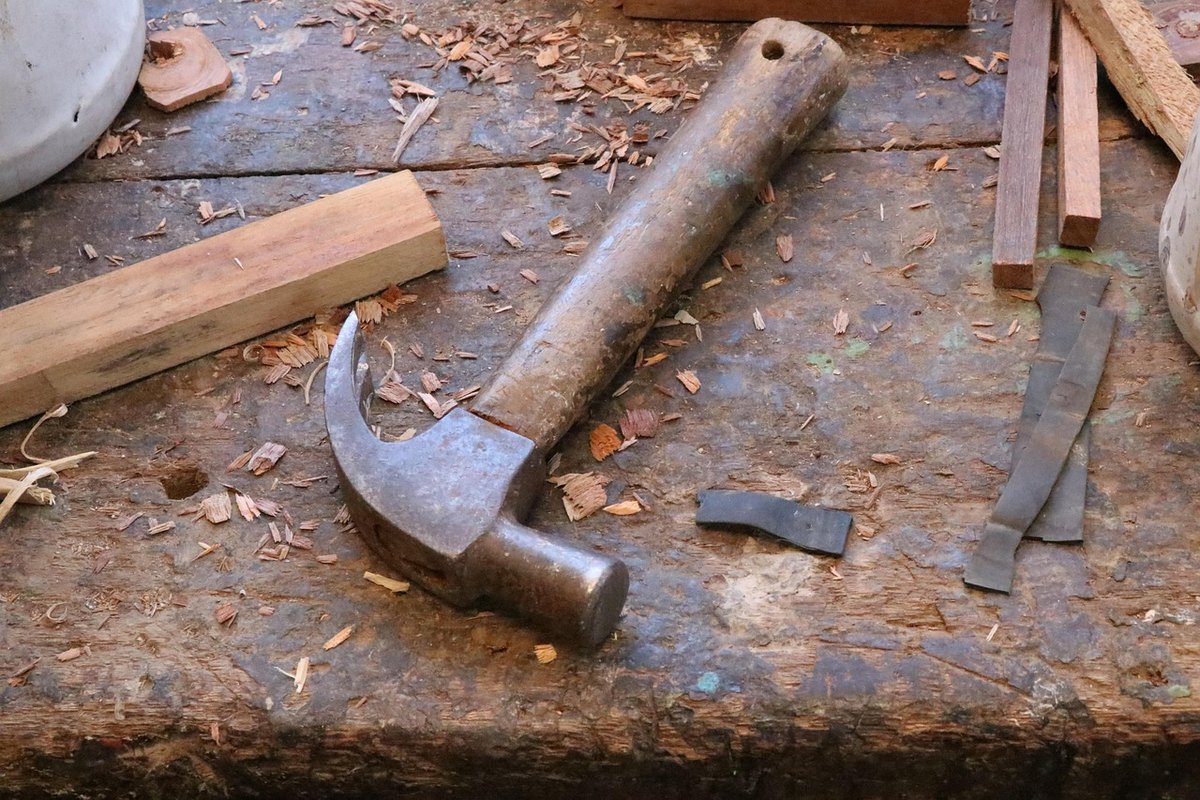
- Claw hammer: for nails and light tapping.
- Wooden or rubber mallet: for striking chisels and tapping joints together without denting the wood.
- Screwdrivers: a few sizes of flat and Phillips heads.
- Hand drill: for pilot holes, if you do not own a power drill.
Do Not Forget Sharpening
Dull tools are frustrating. They tear the wood and need more force, which makes slips more likely. Sharp tools are easier and safer to use.
A basic sharpening stone and a simple honing guide are enough to start. Practice on your chisels and plane blade. It feels slow at first, but it gets easier with time.
Safety Gear Comes First
- Safety glasses to protect your eyes from chips.
- A dust mask for sanding.
- A small first aid kit near your bench.
- Good light so you can see your marks and your hands.
Always cut away from your body. Keep both hands behind the sharp edge of a chisel. Take a break when you feel tired or rushed.
Smart Ways to Buy
You do not need the most expensive tools. But you do want to avoid tools so cheap they will not hold an edge or stay square.
- Check yard sales, estate sales, and used tool shops. Older hand tools can often be cleaned and sharpened.
- Buy one good tool instead of a big set full of pieces you will never use.
- Hold a tool before you buy it if you can. Comfort matters.
- Keep tools dry. Wipe bare steel with a light coat of oil to help stop rust.
Your Starter List
- Tape measure
- Combination square
- Pencil and marking knife
- Handsaw
- A few chisels
- Block plane
- Sandpaper and a sanding block
- Clamps
- Mallet and hammer
- Sharpening stone
- Safety glasses and dust mask
With these tools and a little patience, you can build boxes, shelves, and small tables. Start simple and learn each tool well. Let your skills grow one project at a time.
Sharp hand tools can cause injuries, so consider a beginner class with a qualified instructor and see a medical professional for any serious cut.
Want a clear, step-by-step plan for your first builds? Take a look at our full guide.
We may earn a commission if you buy through links on our guide. Individual results vary. Always follow safe tool and workshop practices.